Table of Contents
ToggleYour church’s entryway is the first impression guests have, a moment where they transition from the outside world into sacred space. Whether you’re updating a century-old vestibule or refreshing a modern foyer, thoughtful design choices matter. The best church entryway ideas balance warmth with reverence, functionality with aesthetics, and hospitality with intentionality. This guide walks through seven practical improvements that deepen that welcome while honoring your community’s values. None require major construction, though some benefit from planning and a little elbow grease.
Key Takeaways
- Strategic church entryway ideas prioritize warm, layered lighting—such as wall sconces and dimmable bulbs—to create an inviting atmosphere that welcomes guests without requiring major renovations.
- A fresh coat of paint in warm accent colors like terracotta or dusty sage, combined with refinished doors and trim, transforms an entryway for under $300 and provides immediate visual impact.
- Clear signage with large sans-serif fonts (24+ points) and thoughtful wayfinding—such as directional markers and bulletin boards—ensures first-time visitors navigate confidently and feel valued.
- Smart furniture placement, minimal clutter, and a console table with mirror create an open, intentional foyer that invites conversation and reflects respect for guests.
- Meaningful decor that reflects your church community—including local artwork, seasonal flowers, and welcoming statements—builds connection and signals that the space is genuinely cared for.
Set the Right Mood With Strategic Lighting
Lighting shapes how people feel the moment they step inside. A dim, dim foyer reads as unwelcoming: harsh fluorescents feel institutional. Aim for warm, layered illumination that guides the eye and invites people deeper.
Start by assessing what you have. If overhead fixtures are the only source, consider supplementing with wall sconces flanking the doorway or lining a hallway. Warm white bulbs (2700–3000K color temperature) feel far more inviting than cool white. For a roughly 10′ × 12′ entryway, two 60-watt-equivalent LED sconces plus an overhead fixture usually balance brightness without glare.
Accent lighting enhances specific features, a small recessed fixture highlighting a cross, or uplighting beneath a vaulted ceiling. This layered approach costs less than you’d think, especially with LED technology. Many churches find that upgrading to dimmable bulbs and adding a simple dimmer switch transforms the space for under $200–400. Dimming also allows flexibility for different services and times of day.
Safety matters too. Ensure entryway lighting meets code requirements (typically 10–20 foot-candles for walkways). Avoid dark corners where people might stumble on steps or uneven flooring.
Create an Inviting Foyer With Color and Paint
Paint is the quickest, most affordable way to shift how an entryway feels. Most churches use neutral tones, white, beige, soft gray, which aren’t wrong, but they’re also forgettable.
Consider a warm accent wall using soft terracotta, dusty sage, or a gentle blue-gray. These colors feel welcoming without clashing with traditional decor. If your church has liturgical colors (purple for Advent, white for Easter), you could echo those subtly in a seasonal accent wall or through trim work.
Before painting, prep is non-negotiable. Fill any cracks or holes with spackling compound, sand smooth, and prime bare drywall with a quality bonding primer. High-traffic entryways benefit from semi-gloss or satin finish paint, which resists scuffs and cleans more easily than flat finishes. For a 300-square-foot foyer, plan on two coats of quality paint (not the budget stuff). A gallon typically covers 350–400 square feet, so you’ll need roughly 1.5 gallons.
Don’t skip the trim and doors. Fresh paint on baseboards, door frames, and the entry door itself ties everything together. If doors are painted an outdated color, a coat of primer and semi-gloss in soft white or a complementary shade makes a dramatic difference. Expect this project to take a weekend and cost $150–300 in materials for a standard entryway.
Incorporate Meaningful Signage and Wayfinding
Guests shouldn’t wander confused through your entryway. Clear signage, combined with thoughtful placement, ensures people find the sanctuary, restrooms, nursery, or office with confidence.
Directional signage works best when it’s readable at a glance. Use large, sans-serif fonts (at least 24-point, preferably larger) with strong contrast between text and background. A small signboard pointing “Sanctuary →” or “Children’s Ministry →” should take half a second to parse. Avoid jargon: “Nursery,” not “Infant Care Facility.”
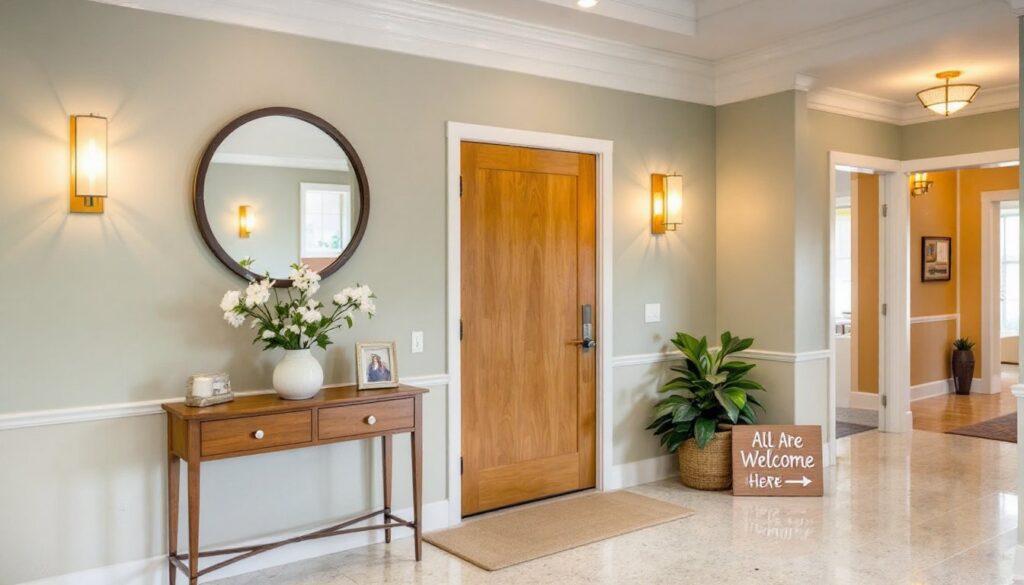
Beyond wayfinding, inspirational or welcoming text reinforces your church’s values. A carved wooden sign reading “All Are Welcome Here” or a verse in elegant calligraphy near the entrance sets a tone. Modern churches sometimes use slate or brushed metal: traditional spaces suit wood or ceramic. These don’t require permits and can be hung with standard picture hangers.
If your entryway is large, a bulletin board displaying community events, service times, or small group schedules adds life and information without clutter. Organize it by month or topic so it doesn’t become a jumble. Update it monthly to keep it fresh, outdated signage feels neglected.
For multi-level churches, large-format directional maps or color-coded floor markers help people navigate. These cost $100–400 depending on material and installation, but they pay dividends in first-time visitor experience.
Add Architectural Interest With Doors and Frames
Doors and frames anchor the entryway visually and functionally. A tired door or frame undercuts even the best paint job.
If your doors are solid and functional, refinishing is often the move. Strip old varnish or paint using a chemical stripper (follow ventilation and PPE safety labels carefully) or sanding, then restain or repaint with a high-quality finish. For wood doors, a warm stain emphasizing the grain adds richness. If doors are damaged or misaligned, replacement is worth considering. A quality solid-core or wood exterior door runs $200–500: installation adds $100–200 if you’re hiring labor.
Door frames deserve attention too. Worn trim, gaps, or crooked frames pull the whole entry down. If gaps are minor, caulk and paint. Larger gaps require removing and resetting the frame, a two-person job that’s worth learning if you’ve done basic carpentry. If the frame is damaged, replacement is more reliable than repair.
Consider upgrading door hardware, handles, hinges, and kickplates. Modern brushed-nickel or oil-rubbed bronze hardware feels upscale and lasts longer than cheap brass. Quality hardware costs $50–150 per door, but it’s visible every single day.
Glass panels or sidelights in entry doors brighten the foyer and make the space feel more open. If your door is solid, adding a glass panel or replacing the door entirely with one featuring panels increases natural light, especially valuable in older, small entryways. This is not a quick DIY (it requires precise framing), but contractors can handle it in a day for $400–800 total.
Maximize Welcome Space With Smart Furniture Placement
How you arrange the entryway affects both function and feeling. Cramped, cluttered foyers discourage lingering: open, intentional layouts invite conversation.
Start by clearing unnecessary items. A coat rack, umbrella stand, and perhaps a small console table are enough. Avoid multiple shoe racks, storage benches, and chairs unless there’s genuine need. If your entryway serves a waiting function, a small seating area (two chairs, a side table) works well in larger spaces. Otherwise, keep it open.
Console tables are workhorses in entryways, they ground the space, provide a surface for welcome materials, and frame the transition inward. A shallow 24-inch-deep console takes minimal space and looks intentional. Wood or painted finishes match most decors. Pair it with a mirror above to brighten the space and help guests check their appearance.
If your entryway is very small, wall-mounted shelving or a narrow wall-hung desk (18–24 inches deep) provides function without eating floor space. Hooks and wall-mounted organizers keep coats, bags, and materials off the floor and out of the way.
Lighting and plants matter here too. A tall potted plant in a corner or flanking the doorway softens hard edges and brings life to institutional-feeling spaces. Choose hardy plants that tolerate inconsistent watering, cast iron plant, snake plant, or peace lily. A plant stand keeps floor clear and draws the eye upward. These touches cost little but transform the feel significantly. Research at home decor inspiration resources for ideas on how to balance furniture and greenery in transition spaces.
Use Decor and Accessories to Reflect Your Community
Your entryway should tell your church’s story. Generic, impersonal foyers don’t build connection.
Start with elements that reflect your faith and community. A tasteful cross or religious artwork on the wall is appropriate and immediate. Keep scale proportional, a large statement piece works in a spacious foyer: a small chapel needs something smaller. Commission local artists if possible: it supports your community and adds authenticity that commercial prints can’t match.
Bulletin boards or welcome displays featuring photos from community events, mission work, or fellowship gatherings create a sense of belonging. People like to see themselves and their efforts represented. Rotate images seasonally or monthly to keep the display fresh and relevant.
Small touches matter: fresh flowers or seasonal arrangements on the console table, scented hand sanitizer in an attractive dispenser, clean entry mats that match your decor. These signal that the space is cared for and that guests are expected. Explore home design ideas for modern living to see how professional spaces balance welcoming warmth with intentional simplicity.
Faith-based quotes, local artist displays, or a welcoming statement near the entrance reinforces values. Keep text messages simple and readable, nothing preachy or off-putting. A large, elegant vinyl decal reading “Welcome to Our Family” or your church’s mission statement can be applied to a wall or window for $30–80 and creates an immediate impression.
Avoid clutter. One or two well-chosen pieces trump five mediocre ones. A carefully curated entryway says, “We’ve thought about how you experience this space.”
Conclusion
A welcoming church entryway doesn’t require major renovation. Thoughtful lighting, fresh paint, clear signage, quality doors, intentional furniture placement, and meaningful decor work together to create a space that honors both faith and hospitality. Start with one or two projects, perhaps paint and lighting, then build from there. Each improvement compounds, creating an entryway that genuinely makes guests feel seen and valued. Your foyer is a statement about who you are as a community.