Table of Contents
ToggleSpring is prime time to refresh your outdoor living area, and the right deck accessories can transform a plain platform into an inviting retreat. Whether you’re hosting weekend barbecues or settling in for a quiet evening, thoughtful additions, from lighting and seating to storage and entertaining elements, make your deck genuinely livable rather than just decorative. This guide covers nine practical deck accessories ideas that balance aesthetics with function, helping you create a space that works as hard as it looks good. You don’t need a full renovation: sometimes strategic upgrades to what you’ve got make the biggest difference.
Key Takeaways
- Strategic deck accessories ideas—including lighting, seating, and storage—transform an ordinary outdoor platform into an inviting retreat without requiring a full renovation.
- String lights and LED lighting solutions extend deck usability from daytime-only to all-hours entertaining, with solar and battery options available for decks without electrical wiring.
- Weather-resistant furniture materials like teak, composite, and resin wicker significantly reduce maintenance while large planters and clustered greenery add visual appeal and soften hard surfaces.
- Functional storage solutions such as deck boxes and wall-mounted shelving keep cushions and supplies organized and weather-protected, preventing seasonal clutter and maintaining deck aesthetics.
- Entertaining essentials like beverage coolers, dining tables, and fire features create gathering focal points that encourage guests to linger and maximize your outdoor living space.
Lighting Solutions to Set the Mood
Lighting transforms a deck from daytime-only to all-hours-usable. Without it, your space becomes off-limits after sunset, which wastes real estate and kills entertaining potential.
String lights (often called bistro or cafe lights) are the most versatile option. They’re cheap, scale from small patios to large decks, and create warm ambiance without a wired connection if you opt for battery or solar versions. Hang them in a grid or zigzag pattern overhead: taut lines look intentional, while loose drapes feel more relaxed.
Recessed deck lighting sits flush into deck boards or fascia and provides subtle uplighting that defines edges and prevents stumbling at night. Installation requires planning before you build or retrofit, so plan your layout carefully. Solar footlights offer a no-installation alternative, stake them along the perimeter and they charge during the day.
Lamp posts and wall sconces mounted to house or railing provide functional, directional light and look more finished than strung lights alone. Choose fixtures rated for wet locations (UL listing) and use durable materials like aluminum or stainless steel to resist rust. LED bulbs last thousands of hours and use a fraction of energy compared to incandescent or halogen, so the upfront cost pays back fast.
Tip: If your deck isn’t wired for electricity, solar-powered and battery-operated lights sidestep the need for a licensed electrician and trenching work.
Seating and Shade Options
A deck without comfortable seating is just an expensive platform. Invest in pieces that suit your climate and maintenance tolerance.
Comfortable Outdoor Furniture Arrangements
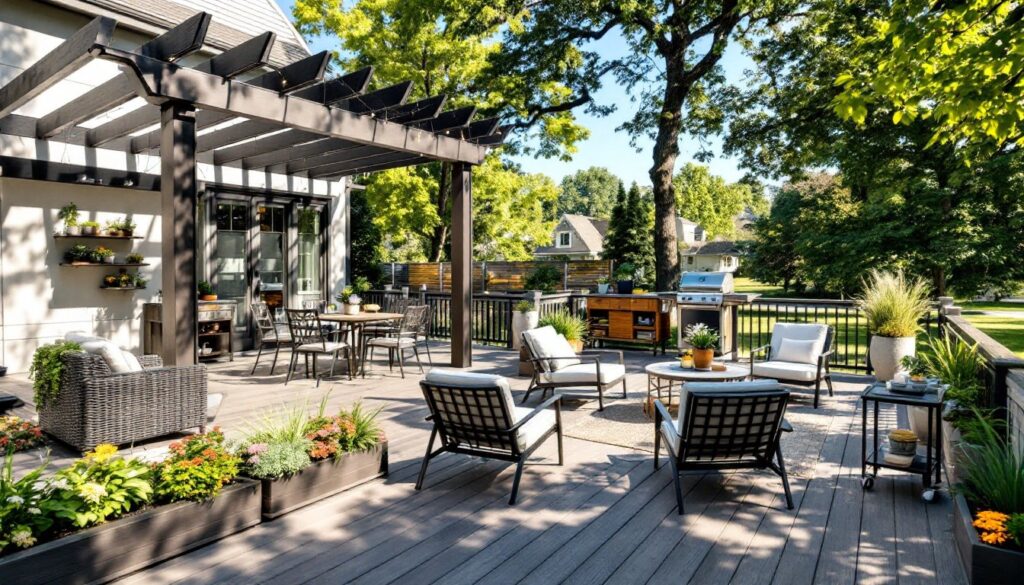
Weather-resistant furniture materials, teak, composite, wrought iron, and resin wicker, outlast untreated wood and don’t need constant refinishing. Teak weathers to a silvery patina but remains structurally sound: composite and resin wicker mimic natural materials with lower upkeep. Check weight limits if you’re on an older deck: deep seating groups can add 1,000+ pounds quickly.
Layout matters as much as the furniture itself. Arrange seating to face a focal point (a view, fire pit, or water feature) rather than forming a circle that isolates conversation. Include a mix, a sofa or daybed for lounging, chairs for upright sitting, and small tables (side tables, coffee tables) for drinks and phones.
Shade is non-negotiable for comfort and protecting skin and furniture from UV. Fixed pergolas provide structure and are permanent installations: retractable awnings offer flexibility. Umbrellas (cantilever or market-style) work for smaller decks and aren’t permanent, so you can move or store them seasonally. Consider mounting points and wind exposure, high-wind areas need more robust anchoring. Southern living patios and porches often feature excellent shade solutions that balance form and function.
Cushions and weather-resistant textiles add comfort and color but require storage or covers during off-season. High-quality outdoor fabrics resist fading and mildew: cheap fabrics deteriorate in a season. Replace cushions every 3–5 years depending on exposure.
Planters and Greenery for Visual Appeal
Planters soften hard deck surfaces and add life without permanent landscaping. Large containers (18 inches or wider) hold root systems properly and look more intentional than scattered small pots.
Choose containers that match your deck aesthetic: ceramic for traditional, concrete or metal for modern, rustic wood for cottage or farmhouse vibes. Material durability matters, frost-crack prone materials like unglazed terracotta need winter protection in cold climates, while concrete or composite resist seasonal swings. Ensure pots have drainage holes or use liners to prevent root rot and standing water.
Plant selections depend on sun exposure and your growing zone. Shade-tolerant options like hostas, astilbe, and ferns work under tree cover: full-sun areas suit ornamental grasses, coneflowers, and sedums. Pair upright plants with trailing varieties (ivy, trailing sedums) for visual depth. Country living gardening tips provide regional-specific advice for selecting plants and arrangements that thrive in your area.
Cluster odd numbers of pots (3, 5, 7) in varied heights for a curated look rather than lining them up. Place larger pots to frame entryways or define zones on the deck. Seasonal rotation, swapping annuals for cool-season greens, keeps the space feeling fresh without replanting from scratch.
Functional Storage and Organization
Deck clutter kills the whole vibe. Purpose-built storage keeps cushions, entertaining supplies, and tools out of sight and weather-protected.
Deck boxes (usually 40–60 inches long) slide under railings or sit against walls and hold seasonal pillows, throws, and deck chemicals. Look for ones with reinforced hinges, gas struts for easy opening, and drainage holes to prevent rot. Composite materials withstand weather better than wood: inspect wood boxes annually for soft spots.
Wall-mounted shelving or bracket systems store planters, lighting supplies, and entertaining gear without eating into seating space. Install shelves on the house wall or railing posts using corrosion-resistant hardware (stainless steel or galvanized). Weight limits vary by bracket type, confirm load capacity before hanging heavy items.
Otomans with internal storage double as seating and stash space, great for small decks where every inch counts. Horizontal cable or deck railing planters free up floor space while adding greenery.
Good organization prevents you from shoving everything into a shed or garage halfway through summer because retrieving it is too annoying. Place frequently used items (sunscreen, bug spray, glasses) at arm’s reach: seasonal items go deeper.
Entertaining Essentials and Bar Elements
A well-equipped deck draws people outdoors and keeps them there. You don’t need a full outdoor kitchen, but a few smart additions encourage gathering.
A beverage cooler or beverage cart sits near seating and eliminates constant trips inside. Built-in grill islands anchor a cooking zone: portable grills work if permanent installation isn’t feasible. Ensure grills sit on non-combustible surfaces and maintain clearance (typically 10 feet) from structures and overhanging branches per code.
Dining tables bring people together more effectively than snack tables. A 36–42-inch round table seats 4–6 comfortably: 48-inch rounds fit 6–8. Extendable tables adapt to casual and formal occasions. Outdoor-rated wood (teak, ipe) or composite tops resist moisture: metal and powder-coated aluminum frames don’t rust if maintenance is kept up.
Creating a Welcoming Atmosphere
Mini bars with a simple sink, small fridge, and wine cooler elevate entertainment without major plumbing. A fire pit or outdoor fireplace creates a gathering spot and extends shoulder-season use into fall and spring. Check local codes, some jurisdictions restrict open flames: others require clearance distances. Built-in seating around fire features increases usability and safety.
Outdoor speakers (battery or wired) set mood without blaring loud. Bluetooth models connect wirelessly to phones: hardwired systems offer better sound but require electrical work. The Spruce Crafts DIY accessories includes tutorials for integrating tech-friendly touches into outdoor spaces.
Thoughtful touches, blankets draped over chair backs for chilly evenings, citronella candles or bug spray stations, outdoor rugs defining zones, signal that you’ve considered comfort. People linger longer in spaces that feel intentional.