Table of Contents
ToggleA bedroom couch isn’t just a space filler, it’s a functional upgrade that transforms how you use the room. Whether you’re looking to carve out a quiet retreat, add seating for guests, or create a multi-purpose sanctuary, a well-placed sofa redefines the entire dynamic. The trick is knowing where to position it, what size works, and how to style it so it feels intentional rather than cramped. This guide walks you through five proven layouts and practical decisions that’ll help you nail the couch-in-bedroom approach without sacrificing comfort or flow.
Key Takeaways
- Position a bedroom couch perpendicular to a window or on a wall to create an intentional reading nook with proper natural light and separation from the main sleep zone.
- For small bedrooms, choose a 39- to 62-inch loveseat or apartment sofa with exposed legs and neutral upholstery to avoid overwhelming the space while maintaining functionality.
- Master bedrooms 12 by 14 feet or larger can accommodate a true sitting area anchored by a larger sofa—use a rug to ground the space and maintain at least 18 inches of walking clearance around all furniture.
- Layer bedroom lighting with warm LED bulbs (2700K color temperature) using floor and table lamps rather than bright overhead fixtures to support the room’s wind-down purpose.
- Match your couch’s color, materials, and style to your existing bedroom décor by echoing your bed’s fabric, wood tones, and design aesthetic for a cohesive, intentional look.
- Maximize small spaces by incorporating dual-purpose furniture like storage ottomans, sofa beds, or built-in shelving that adds functionality without increasing the footprint.
Create a Cozy Reading Nook With Strategic Placement
A reading nook is one of the most rewarding ways to use bedroom seating. Position your couch perpendicular to a window or facing a calm wall, anywhere natural light lands during the day and away from the main bedroom flow. You want this spot to feel intentional and removed from the bed.
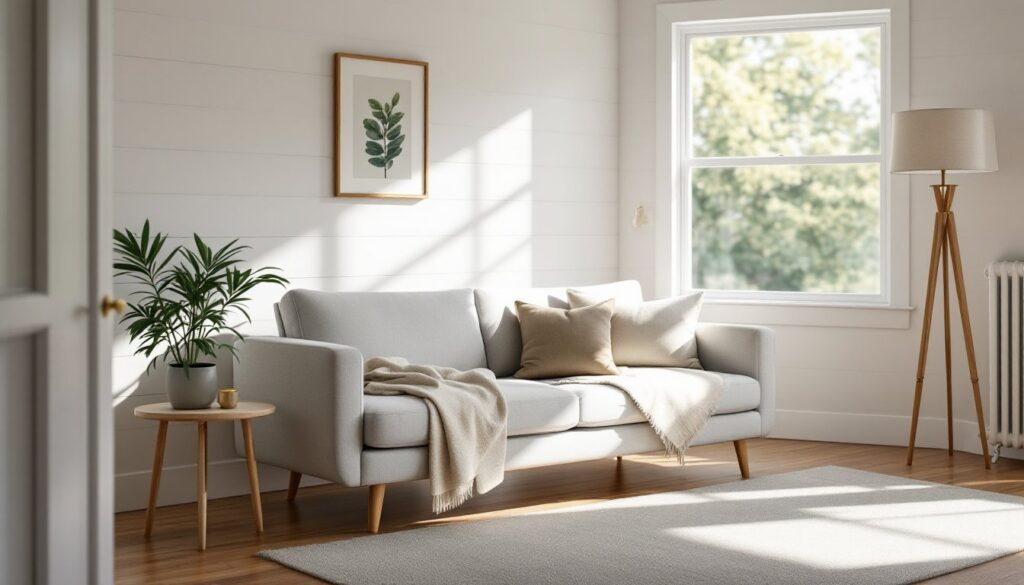
Pair the couch with a small side table (24 to 30 inches tall works well) and a standing or clip-on lamp for evening reading. A throw blanket draped over the arm creates instant coziness without needing to redecorate. Bookcases or floating shelves nearby add storage without visual clutter. Keep the color palette neutral or soft, grays, creams, and warm whites recede visually and let you focus on your book instead of the furniture.
If space is tight, a loveseat or apartment-scale sofa (around 72 inches wide) gives you the same nook feeling without dominating the room. The goal here is retreat, not showiness. A single reading light, a small side table, and a couch define the whole zone.
Define a Sitting Area in Your Master Bedroom
Master bedrooms with an extra few feet of space can accommodate a true sitting area anchored by a larger sofa. Place it opposite the bed, or along a wall perpendicular to it, creating a clear “living” zone separate from the sleeping zone.
This layout works best in bedrooms 12 by 14 feet or larger. Use a rug to ground the seating area and define its boundaries, a 5-by-8-foot or 6-by-9-foot rug works well for most arrangements. Add two accent chairs, a coffee table, and perhaps a console behind the couch if you’re placing it across from the bed. Ensure there’s at least 18 inches of walking space around all furniture. Bedrooms with distinct sitting areas feel more hotel-like and intentional.
Consider the sight line from the bed: you don’t want to stare directly at the back of a sofa all night. A partial wall divider, tall plants, or strategic furniture arrangement can soften that visual impact. The sitting area should feel like an addition, not an intrusion.
Choose the Right Sofa Size and Style for Small Spaces
Small bedrooms demand ruthless honesty about dimensions. Measure your room’s usable floor space (total width minus nightstands, total length minus closet swing), then subtract traffic lanes. Most bedrooms need at least 2.5 to 3 feet of walkway clearance around the perimeter.
For tight quarters, a 39- to 62-inch loveseat or apartment sofa beats a full sectional. Avoid deep-seated designs (more than 36 inches), they eat floor space without adding comfort in a bedroom context. Low-profile or mid-height sofas (under 36 inches tall) work better in smaller rooms because they don’t visually overwhelm.
Choose frames in light wood (oak, birch) or metal legs over solid bases. Exposed legs make furniture feel less anchored and bulky. Upholstery in solid, neutral tones (gray, taupe, cream) keeps the eye moving and prevents the couch from becoming the room’s focal point. Avoid heavily patterned fabrics unless your bedroom is very large and already styled around one dominant pattern. A compact sofa that serves multiple purposes, storage underneath, convertible to a day bed, or featuring a pull-out ottoman, maximizes functionality without bloat.
Optimize Lighting and Accessories for Bedroom Comfort
Bedroom lighting around a couch should support the room’s wind-down purpose. Avoid bright overhead fixtures directly above seating: instead, use warm LED bulbs (2700K color temperature) in lamps positioned to either side of the couch or on nearby tables.
A floor lamp behind the sofa works well for reading without glare, while a table lamp on a side table offers adjustable task lighting. Dimmer switches are invaluable if your couch sits under a ceiling fixture. Layer your lighting: ambient (overhead or wall sconces), task (reading lamp), and accent (a decorative fixture or string lights if the vibe suits it).
Accessories matter more in small spaces because they define purpose. A decorative pillow or two in complementary colors, a throw blanket, and a carefully selected side table establish that this is intentional seating, not just extra furniture. Keep throws and pillows to no more than three pieces to avoid visual noise. A small plant or framed art above the couch anchors the area without demanding much square footage. These touches signal “this couch belongs here” to anyone entering the room.
Blend Your Couch With Existing Bedroom Decor
The couch should echo your bedroom’s existing color and style rather than clash with it. If your bed is upholstered in a rich fabric, choose a sofa in a tonal variation, lighter or slightly darker, but the same color family. If your bed has a wooden frame, lean into wood accents on the sofa’s legs or side tables.
Design inspiration from HGTV’s bedroom furniture ideas shows that successful bedroom seating works within the room’s existing aesthetic instead of introducing a competing style. Whether your bedroom is mid-century modern, farmhouse, transitional, or contemporary, the couch should belong to that world.
For a cohesive look, repeat materials: if you have brass hardware on dressers, choose sofas with brass feet or hardware. If your walls are shiplap, a streamlined modern couch might feel off. Instead, consider a rolled-arm sofa in a fabric that echoes your wall texture’s warmth. Consistency doesn’t mean boring, it means intentional. Your bedroom becomes a composed room rather than a furniture showroom when every piece plays the same design language.
Maximize Functionality and Storage Around Your Bedroom Seating
A bedroom couch earns its square footage through dual-duty design. Storage ottomans replace traditional coffee tables, holding extra blankets or pillows. Sofa beds or convertible designs sleep guests without sacrificing seating. Recliners with built-in cup holders combine comfort with utility.
Consider bedroom seating ideas that combine style with function to see how professional designers maximize small spaces. Floating shelves above the couch hold books or decor without occupying floor space. A console table behind the sofa, if space allows, offers surface area for a lamp, phone charging, or display without expanding the furniture footprint.
Wall-mounted shelving or pegboard near the sitting area keeps essential items within arm’s reach while reducing table clutter. If your couch has a low profile, baskets underneath can store seasonal items. Interior design resources like MyDomaine’s styling tips emphasize that function and beauty aren’t opposed in bedroom design, they’re partners. The sofa that’s most useful is the one you’ll actually sit on and enjoy.
Conclusion
A bedroom couch transforms how you use your space when it’s sized, positioned, and styled with intention. Start with honest measurements, choose a scale that fits your room, and place the sofa where it creates a distinct zone without blocking traffic. Light it properly, accessorize minimally, and let it echo your bedroom’s existing design language. The result isn’t just extra seating, it’s a sanctuary that does more than look good.