Table of Contents
ToggleA private deck is a retreat, a place where you can relax without neighbors watching your every move. But not all privacy solutions are created equal. Some require heavy maintenance, others clash with your home’s style, and plenty of them eat up your budget fast. The good news? You’ve got solid options that don’t involve building a fortress. Whether you’re working with a tight backyard or a sprawling patio, the right deck privacy fence can block unwanted sight lines while actually enhancing your outdoor aesthetic. This guide walks through seven proven approaches, from living walls to modern composites, so you can pick something that fits both your space and your wallet.
Key Takeaways
- Deck privacy fence options range from living walls and slatted designs to composite panels and metal screens, each with different costs, maintenance needs, and timelines.
- Wood fencing costs $1–$5 per linear foot but requires sealing every 2–3 years, while composite and vinyl cost 3–5 times more upfront but offer 20+ years of zero-maintenance privacy.
- Living fences like bamboo and climbing vines provide eco-friendly privacy and air quality benefits, but take 1–2 years to reach full coverage and require consistent watering and seasonal maintenance.
- Slatted fence designs with ½-inch gaps offer near-total privacy while maintaining an open feel, and horizontal boards are easier to install and less prone to warping than vertical boards.
- Check local building codes before installation, as fences over 4 feet tall often require permits, and always call 811 before digging to locate underground utilities.
- Calculate your deck’s linear footage precisely and sketch a side view with desired height and post spacing before purchasing materials, or request a free design consultation from a fence contractor.
Vertical Garden Walls for Living Privacy
A living fence transforms your deck edge into a green backdrop while actually improving air quality and wildlife habitat. Think bamboo screens, climbing ivy, or tiered planter boxes packed with fast-growing vegetation.
Bamboo is the workhorse here. Running bamboo varieties grow 3–5 feet per year and create dense screening within a single season. But, running bamboo spreads aggressively underground, so you’ll need to install a root barrier, typically a 30-inch-deep plastic or metal barrier, to keep it from invading neighbors’ yards. Clumping varieties are slower (2–3 feet annually) but don’t require barriers, making them safer for tight spaces.
For climbing ivy (clematis, jasmine, or English ivy), you need a sturdy trellis structure. Build one from pressure-treated 2×4 lumber spaced on 16-inch centers, or use metal cable systems. The ivy takes 1–2 seasons to fill in, and some varieties require seasonal pruning or even removal if you live where they’re invasive.
Vertical planter systems, modular boxes or wall-mounted planters, give you the most control and work on renters’ decks since they’re removable. Fill them with fast-growing perennials like salvia or ornamental grasses. They dry out quickly in full sun, so plan for frequent watering or a drip irrigation system.
Living fences cost more upfront ($40–$100 per linear foot installed) but save on maintenance long-term if you plant strategically. Full sun = faster growth but more water demand. Partial shade = slower but steadier. Know your USDA hardiness zone before buying anything: a gorgeous southern vine won’t survive a Minnesota winter.
Slatted Fence Designs for Modern Aesthetics
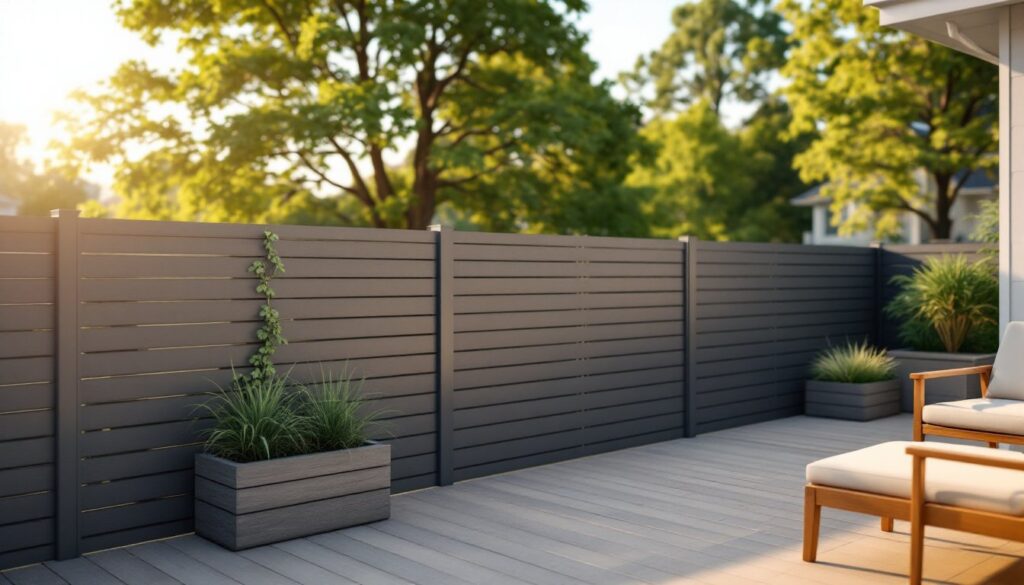
Slatted fences, horizontal or vertical boards with small gaps, give you privacy without the heavy, fortress-like feel of solid panels. They work especially well on contemporary decks and let air flow through, reducing wind load on your structure.
Vertical slatted designs are trendy right now. Use 5/4 composite decking boards or pressure-treated 1×6 or 1×8 lumber mounted vertically on horizontal 2×4 rails. Space the boards ½ to 1 inch apart for visibility control, tighter gaps block more view, wider gaps let light through. A 6-foot-tall fence with ½-inch gaps gives near-total privacy from a standing position, while 1-inch gaps feel more open.
Horizontal slats are sleeker and easier to install. Mount 1×8 or 1×10 boards on vertical 2×4 posts, again with ½- to 1-inch gaps. Horizontal boards also hide imperfections better and are less prone to cupping or warping than vertical boards.
Material choice matters. Pressure-treated lumber ($1.50–$3 per linear foot) needs sealing every 2–3 years. Cedar or redwood ($3–$6 per linear foot) looks better longer but costs more and still requires yearly maintenance. Composite boards ($5–$12 per linear foot) skip the staining hassle but are heavier and require specific fasteners. For a 60-linear-foot deck fence, you’re looking at $90–$720 just for boards, before posts, hardware, and labor.
Slatted fences typically need building permits if they exceed 4–6 feet (check your local code). Installation is doable for a confident DIYer with a miter saw, level, and impact driver. Two people make the job significantly faster.
Composite Privacy Panels and Low-Maintenance Options
If you’re tired of sanding, staining, and replacing rotted boards every five years, composite privacy panels might be your answer. They’re engineered from wood fiber and plastic, designed to resist rot, insects, and fading.
Composite panels come in solid or slatted styles, usually 6 feet tall and 6 feet wide. A single panel runs $200–$400, plus installation hardware. You’ll mount them on 6×6 or 4×4 posts spaced 6 feet apart. The panels slot into post grooves or bolt directly to the posts, cleaner than building a frame from scratch.
The real win is maintenance. No staining, no rot risk, no annual touch-ups. Rinse them with a garden hose yearly, and you’re done. That’s a game-changer for busy homeowners. The downside? Composite costs roughly 2–3 times more than pressure-treated wood upfront, and the material can feel plastic-y if you choose the wrong color. Darker tones hide dirt better but absorb more heat: lighter colors feel more open but show algae growth faster in damp climates.
Composite materials expand and contract with temperature, so you need clearance between panels and proper drainage below. Don’t bury the bottom of a composite panel in soil or gravel: leave 2–3 inches of air gap to prevent moisture wicking.
Alternative: Vinyl panels (pure PVC, no wood fiber) cost slightly less ($150–$350 per panel), resist fading better, and clean up easily with soap and water. They’re more flexible, too, so they handle settling better than rigid composites. Look for Virgin vinyl rather than recycled to avoid brittleness over time. Both materials last 20+ years with zero maintenance, a real value if you plan to stay put.
Mixed Material Fencing for Visual Interest
Combining wood, metal, and stone (or even composite) breaks up visual monotony and lets you match your deck’s existing style. This is where personality shines.
Wood + metal is the most popular mix. Use wooden 1×10 boards as the main privacy element and frame them with powder-coated steel angle iron or aluminum tubing painted black or bronze. The metal acts as posts and dividers, creating a grid effect. This combo costs 30–50% more than wood alone ($2.50–$4 per linear foot material-only) but looks intentional and modern.
Wood + stone works for rustic or farmhouse aesthetics. Build a wooden fence on top of a 2–3-foot stone or brick base. The stone anchors the design visually and protects the wood from splash-back rot, a common failure point. You’ll need a concrete footer (12 inches deep, below the frost line) and properly draining gravel behind the stone base. This is more involved than straight fencing but creates a polished look.
Metal mesh + wood slats offer an industrial edge. Use steel cable or expanded metal mesh (like hog panel) as a backing, then add wood slats over it. The mesh adds strength without extra bulk, and you can see through it slightly if you want shadow play. Watch for rust on uncoated steel: use galvanized, stainless, or powder-coated hardware.
The real cost isn’t the materials, it’s the complexity. Mixed-material fences usually require more precise measurements, custom hardware, and planning. A skilled DIYer can tackle simple wood + metal combos, but stone bases or custom metal work might need a fence contractor. Get quotes from at least two local shops before committing.
Lattice and Climbing Vine Solutions
Lattice panels offer semi-privacy, they block direct sight lines while maintaining an open, airy feel. Pair them with climbing vines and you’ve got a solution that looks intentional, not makeshift.
Wooden lattice (½-inch strips in diagonal or square patterns) costs $15–$40 per 4×8 sheet. It’s lightweight, installs quickly, and works well on existing deck railings or as panels between posts. The downside? It’s fragile. A leaning ladder or a thrown ball punches right through. Reinforce it with diagonal bracing on the back if you’re in a windy area or if kids play nearby.
Composite lattice (around $30–$60 per sheet) is much tougher and doesn’t rot, but it’s also heavier and overkill for most uses. Save the upgrade cost for a sturdier fence style if durability is your main concern.
Vines are what make lattice work for privacy. Fast growers like clematis, morning glory, or hops fill in within two seasons. Slower, permanent choices like ivy or climbing roses take 3–5 years to reach full coverage. With climbing vines, your lattice essentially disappears under the greenery, you get a living privacy wall.
Key setup: Mount lattice panels on posts with ¼-inch standoffs to allow air circulation behind. This prevents rot and lets vines climb the back side too. Space posts 4–6 feet apart for adequate support. In areas with heavy snow or ice, check your local building code: some jurisdictions require wind load calculations for tall lattice structures.
Cost-wise, lattice + vine setup runs $30–$80 per linear foot installed, making it one of the more budget-friendly living-fence options.
Horizontal Privacy Screens and Contemporary Styles
Horizontal screens are the darling of modern landscape design right now. Clean lines, minimal visual clutter, and excellent privacy-to-bulk ratio, especially when you stack multiple screens at different angles.
Wooden horizontal screens use 2×6 or 2×8 boards (actual dimensions: 1.5 inches × 5.5 or 7.5 inches) mounted on vertical posts with narrow gaps. Offset the boards on alternating sides of the posts for a shadow-box effect, half the board shows on one side, half on the other. This creates depth and visual interest while maintaining privacy from all angles.
The shadow-box technique requires precise measurement and some math. If you’re using 2×8 boards and want them ½ inch apart, each section repeats every 4.25 inches vertically. Sketch your post layout first, and consider hiring a contractor for custom offsets: small mistakes compound over height.
Metal screens (steel, aluminum, or corten) amp up the contemporary vibe. Think horizontal steel rods spaced 3–6 inches apart, mounted on a frame. They’re expensive ($100–$200 per linear foot installed) but minimal-maintenance and incredibly durable. Corten steel develops a rust patina that stabilizes over time, it looks weathered and intentional, not neglected. Powder-coated aluminum screens are lighter and don’t rust but lack that industrial character.
Hybrid screens mix metal frames with wooden or composite infill. You get the clean geometry of metal with the warmth of wood. Installation is usually a two-person job or a contractor project, especially if heights exceed 6 feet or spans are longer than 8 feet.
Many jurisdictions require engineering stamps on screens taller than 6 feet or in high-wind areas. Check local building codes before ordering custom work: a design that looks great might need storm-bracing to meet code.
Choosing the Right Fence for Your Deck and Budget
Privacy fences aren’t one-size-fits-all. The right choice depends on your climate, maintenance tolerance, aesthetic goals, and timeline.
Budget First: Wood (pressure-treated or cedar) is cheapest upfront ($1–$5 per linear foot for materials). Composite and vinyl cost 3–5 times more initially but save money over 20+ years if you factor in zero maintenance. Living fences (bamboo, vines) cost $2–$8 per linear foot but require ongoing watering and pruning. Metal screens are priciest ($100–$200 per linear foot) but last indefinitely with minimal care.
Climate Matters: In humid regions, wood rots faster, consider composite, vinyl, or metal. In arid climates, wood lasts longer and living fences need irrigation. High-wind areas favor sturdy posts and braced designs (lattice alone won’t cut it). Cold climates where frost heave is common need deep footings (12+ inches below the frost line, which varies by region, check with your local building department).
Maintenance Reality: Wood requires sealing every 2–3 years. Composite and vinyl need occasional hosing and cleaning. Living fences need seasonal trimming and consistent watering. Metal needs rust inspection (even galvanized steel eventually oxidizes at cut edges). Be honest about what you’ll actually do.
Timeline: Living fences take 1–2 years to reach full privacy. Wood and composite are immediate. Metal screens can take 2–4 weeks for custom fabrication plus installation.
Getting It Right: Start by measuring your deck perimeter, don’t estimate. Calculate linear feet accurately: a 20×16-foot deck with one open side is roughly 40 linear feet, not 52. Factor in gates or openings. Sketch a side view showing deck height, desired fence height (typically 4–6 feet for privacy), and post spacing (usually 4–8 feet apart). Many fence retailers and contractors offer free design consultations: take them up on it before buying materials. Resources like 20 backyard privacy ideas and 10 easy backyard privacy fences showcase dozens of real installations you can reference when deciding.
Most decks are cosmetic and don’t need a permit, but fences over 4 feet tall often do, check your local code before building. A fence that blocks a required sight line at a property corner or damages a utility easement can mean removal and fines. Call 811 before digging post holes to locate underground utilities.