Table of Contents
ToggleA small guest bedroom doesn’t have to feel cramped or uninviting just because the budget’s tight. With smart planning and a few strategic purchases, you can create a comfortable retreat that makes visitors actually want to stay over. The key is choosing multifunctional pieces, using vertical space, and letting paint and textiles do the heavy lifting. This guide walks you through practical ideas for transforming a modest bedroom into a welcoming space that won’t drain your wallet. Whether you’re working with a spare corner or a dedicated 10-by-12 room, these budget-friendly strategies will help you maximize both comfort and style.
Key Takeaways
- Small guest bedroom ideas on a budget prioritize vertical storage, multifunctional furniture, and strategic lighting to maximize comfort without excess spending.
- Wall-mounted shelving, under-bed storage containers, and over-the-door organizers offer affordable solutions that keep small spaces open and uncluttered.
- Paint in soft, neutral tones (pale blues, warm taupes, soft grays) and layered textiles create an inviting atmosphere that makes rooms feel larger for minimal cost.
- Invest in comfort essentials like quality bedding ($40–80), blackside window coverage, and a good pillow ($20–30), then use budget decor to add personality.
- Furniture arrangement matters more than quantity—float pieces away from walls, skip bulky headboards, and use one accent chair instead of a sofa to maintain floor space and flow.
- Warm white LED lighting ($15–50 per fixture) and string lights ($10–20) transform a cramped room into a cozy retreat that guests actually want to stay in.
Smart Storage Solutions That Maximize Your Space
Storage is the silent hero of small bedrooms. Without it, even a tidy room feels cluttered and cramped. Start by measuring your walls, you’ll likely have vertical real estate you haven’t tapped yet. Wall-mounted shelving is a game-changer: a set of three floating shelves costs $30–60 and holds far more than a nightstand while keeping the floor clear. Install them 12–18 inches above a desk or seating area for functional storage that doubles as display space.
Under-bed storage containers are your best friend. Clear plastic bins ($10–20 per set) let guests see what’s stored without opening them, and they slide easily for access. If the bed has legs tall enough (usually 8–10 inches), you can fit standard storage boxes underneath.
Don’t overlook the back of the door. A slim over-the-door organizer ($15–25) provides pockets for extra blankets, robes, or charging cables without eating into floor space. Wall hooks ($.50–2 each) near the entrance give guests a place to hang jackets or bags without needing a bulky coat rack.
For closet solutions, if your guest room has even a modest closet, add a second rod. A tension rod (10–20 dollars) doubles hanging space instantly. Shelf dividers or vacuum-seal bags ($15–25) keep off-season items compressed and organized, freeing up the main shelf for guests’ luggage or belongings.
Furniture Arrangement And Layout Tips
Arrange furniture to create an open, uncluttered feel rather than pushing everything against the walls. That sounds backward, but a bed angled in the corner or floating slightly into the room often makes a small space feel larger because it breaks up the visual box of the room. Measure your bed (standard queen is 60″ x 80″) and your available space before you move anything, this isn’t a guessing game.
Choose a bed frame without a bulky headboard. A simple platform bed, a metal frame, or even a low-profile solid headboard keeps sightlines clean and makes the room breathe. If you want a headboard for comfort and style, mount a thin fabric-wrapped one directly to the wall (about $50–100) or DIY it with plywood and fabric stapled on the back.
Keep nightstands minimal. A single small table (24–30 inches wide) on one side is enough for a lamp and a glass of water. Skip the second one, it’s visual clutter in a small room. Alternatively, a narrow wall-mounted shelf (24–30 inches wide) at bedside height serves the same purpose and costs $20–40.
If the room needs seating, a single accent chair or a low bench at the foot of the bed works better than trying to squeeze in a sofa. A $100–150 upholstered accent chair from a big-box furniture retailer takes up less floor space and invites guests to sit and relax. Avoid low, deep pieces that consume square footage without providing real utility.
Budget-Friendly Bedding And Textiles
Bedding sets the mood and comfort level, and you don’t need a luxury price tag. A 3- or 4-piece set (duvet cover, fitted sheet, flat sheet, and pillowcase) runs $40–80 at retailers like Target, Walmart, or Amazon. Aim for 300-thread-count cotton or a cotton-blend, it’s breathable, durable, and easy to wash. Skip ultra-low thread counts (they pill and wear out fast) and ultra-high claims (diminishing returns above 600 threads on most fabrics).
Layer with texture to add personality without cost. A quilted throw ($15–30) draped over the foot of the bed gives visual interest and extra warmth. Two throw pillows ($10–20 combined from discount retailers) in contrasting but coordinating colors make the space feel intentional. Keep the color palette to 2–3 tones so it doesn’t feel chaotic in a small footprint.
Curtains or a roller shade ($20–50) are essential for guest comfort, blackout options help guests sleep in. Lightweight curtain panels in a neutral tone make the room feel more spacious than heavy drapes. If the budget is really tight, a tension rod (about $10) and white linen sheets repurposed as curtains work in a pinch and actually look intentional and modern.
One quality pillow per guest ($20–30 for a decent memory foam or down alternative) beats a stack of cheap ones. Guests notice the difference between a lumpy, flat pillow and one that actually supports their head. Store 1–2 extras in a sealed storage bag so they stay fresh.
Lighting And Ambiance On A Shoestring
Lighting transforms a cramped room into a cozy one. Most small bedrooms come with a single overhead fixture, fine for clearing cobwebs, not great for inviting guests to relax. Add a bedside lamp ($15–40) for warm, soft light when someone’s reading. A 40–60 watt equivalent LED bulb keeps energy costs minimal and doesn’t overheat the lamp.
Floor lamps ($20–50) are easier to install than wall sconces and move with you if you rearrange later. Place one in a corner to bounce light off the walls and make the room feel less boxy. Avoid harsh white LEDs (4000K or higher color temperature), go for warm white (2700K) bulbs that feel inviting.
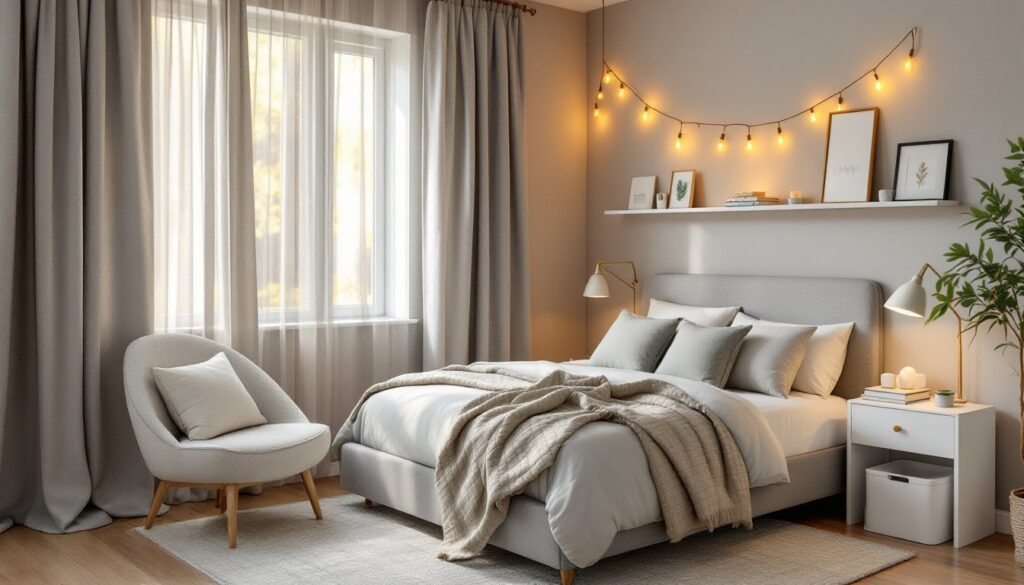
String lights or fairy lights ($10–20) add ambiance without permanent installation. Drape them above the headboard or along a shelf for a gentle glow that makes the space feel like a retreat. This costs almost nothing and has huge visual impact.
DIY Decor And Wall Treatments
Paint is the cheapest way to refresh a room’s feel. A quart of paint (about $8–12 per quart, and a small bedroom needs 1–2 quarts for walls) changes everything. Soft grays, warm taupes, or pale blues feel calming and open. Avoid dark colors in tiny rooms, they close in the space. If you’re renting, ask about removable wallpaper ($15–40 per roll) instead. It applies like contact paper and peels off cleanly.
One accent wall ($10–20 for paint or wallpaper) adds personality without overwhelming a small space. Try a mural peel-and-stick (search “peel-and-stick mural” online for options under $30) for a designer look with zero commitment.
Simple wall art doesn’t require framing. Lean prints ($5–15 each) against floating shelves or stack them on the floor for a casual, modern look. Unframed posters or canvas prints ($10–25) hung in a grid or cluster create a focal point without eating budget. Canvas prints from budget retailers often cost less than framing.
Color Schemes That Feel Larger And More Inviting
Color choice has real power in small spaces. Light, neutral walls (whites, creams, soft grays, pale greens) reflect light and make the room feel bigger than it is. Paint coverage is usually 350–400 square feet per gallon on a first coat: a small bedroom’s walls (roughly 300–400 square feet for a 10×12 room, accounting for windows and doors) often need just one quart.
Warm neutrals like greige (gray-beige) or soft taupe feel more inviting than stark white, especially in bedrooms. They’re also forgiving if your furniture or bedding doesn’t match perfectly. Test paint samples on your actual walls, how color looks in the store isn’t how it’ll look in your room’s light. Most hardware stores let you buy pint samples ($3–5) to try before committing.
Color psychology matters. Cool tones (blues, greens) calm and relax, good for sleep. Warm tones (peachy, golden, soft reds) energize and feel cozy. Pick bedding and accents in one of these families so the room coheres. Designers at sites like Young House Love often showcase how subtle color builds a calming atmosphere.
Avoid more than three colors (including whites and grays). Too many competing hues make a small room feel scattered. A safe formula: neutral walls, one accent color in bedding or a single wall, and natural wood or metal for furniture. This feels sophisticated and intentional, not like you threw things together.
Conclusion
Creating a welcoming guest bedroom on a budget comes down to smart priorities. Invest in comfort (a decent bed, clean linens, blackout window coverage) and let affordable decor (paint, textiles, lighting) handle style. Vertical storage and minimal furniture keep the space feeling open, while color and light invite people to relax. Start with one or two changes, then build from there. Your guests will appreciate the thoughtfulness far more than the price tag.