Table of Contents
ToggleA corner gas fireplace isn’t just a heat source, it’s a design anchor that draws eyes and anchors a room’s layout. Unlike traditional fireplaces that demand premium wall space, corner gas fireplaces fit snugly into often-wasted architectural pockets, freeing up square footage for furniture and flow. Whether your home leans modern, rustic, or somewhere in between, a well-planned corner gas fireplace becomes the focal point that ties the space together. This guide walks through seven stylish corner gas fireplace ideas, installation fundamentals, and decorating strategies to help you integrate one seamlessly into your home.
Key Takeaways
- Corner gas fireplace ideas maximize room layouts by using wasted architectural space without sacrificing floor area, making rooms feel larger and opening up sightlines.
- Corner gas fireplaces offer design flexibility across modern, rustic, and transitional styles—from sleek linear inserts with glass fronts to substantial stone surrounds with wood mantels.
- Gas fireplaces require no chimney in many modern designs, flip-switch operation, and minimal maintenance compared to wood-burning alternatives, making them a practical home upgrade.
- Proper installation demands permit approval, licensed gas technician work, correct ½ or ¾-inch gas line sizing, and compliance with local IRC codes and vent-free or direct-vent regulations.
- Expect a budget of $3,500 to $12,000+ installed depending on the fireplace unit and surround material, with high-end stone or custom cabinetry pushing costs higher.
- Annual professional inspections, biweekly glass cleaning, checking oxygen depletion sensors (for vent-free models), and keeping the fireplace clear of flammable objects within 3 feet ensures safety and efficiency.
Why Corner Gas Fireplaces Are a Smart Home Upgrade
Corner gas fireplaces solve a genuine problem: how to add visual warmth and ambiance without sacrificing the floor plan you’ve already worked with. A traditional fireplace consumes an entire wall: a corner unit tucks neatly into a junction, opening up sightlines and making rooms feel bigger.
From a practical standpoint, gas fireplaces require no chimney venting in many modern designs (especially vent-free or direct-vent models), which simplifies installation compared to wood-burning units. They produce consistent heat on demand, flip a switch or use a remote, without the mess of ash, soot, or chimney cleaning. Insurance premiums typically stay favorable since gas fireplaces meet modern safety standards when properly installed.
Design-wise, a corner placement creates natural symmetry. Seating arranged around the fireplace encourages conversation and coziness without the dead space that awkward furniture floats create. The corners often feel like the “forgotten” bones of a room: a fireplace gives them purpose.
Modern Corner Gas Fireplace Styles and Designs
Contemporary and Minimalist Looks
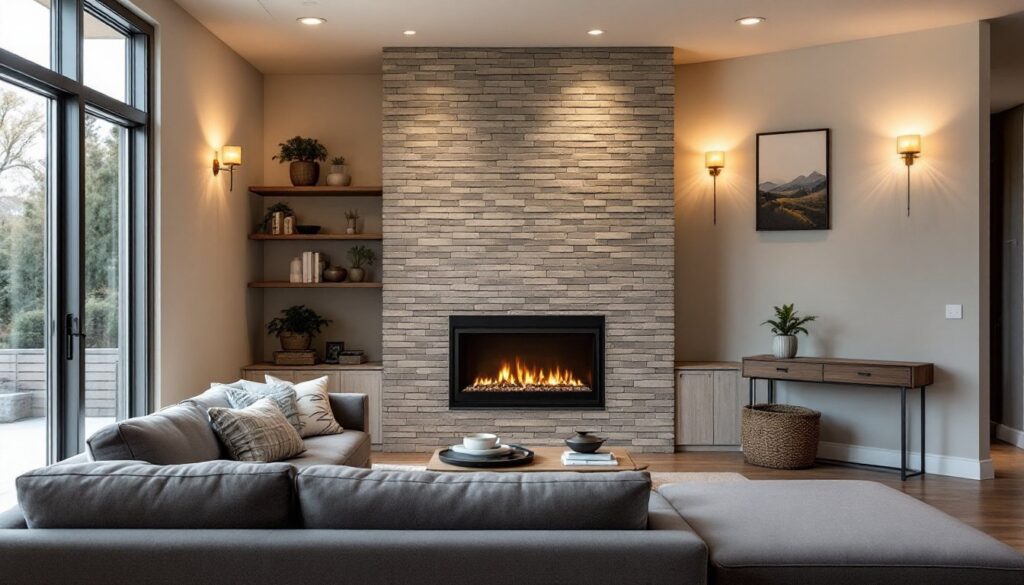
A linear gas fireplace insert with sleek black or brushed-steel framing works beautifully in corner configurations. Picture a 36- to 48-inch glass-fronted unit mounted at eye level, surrounded by stacked stone or shiplap in neutral tones. The flames flicker behind tempered glass with minimal ornamentation, no mantels, no decorative surrounds beyond a simple trim. Pair it with low-profile seating and let the fireplace glow speak for itself.
Another contemporary approach uses a recessed corner unit flush with the walls, with hidden venting routed through the rim joist or rim band. This creates an ultra-clean aesthetic where the fireplace seems to float within the corner. A polished concrete or cement-board surround amplifies the modern vibe.
These styles also work with 3D flame effects (some gas fireplaces now offer multi-color LED flame technology), giving you warm yellow-orange tones or cool blue-white accents depending on mood.
Traditional and Rustic Aesthetics
For a rustic corner fireplace, start with a substantial stone or brick surround, real or high-quality veneer, that climbs from floor to ceiling or stops at a deliberate shelf line. A wood mantel (6×8 or 8×8 reclaimed timber works) sits above the firebox opening, anchoring the design. The gas insert itself can feature a traditional log grate or ceramic logs for authentic appearance.
A corner fireplace with built-in cabinetry suits farmhouse or transitional styles well. Shaker-style cabinetry flanks the unit, with shelving above and closed storage below for firewood (or decorative baskets). This creates a focal-point cabinet that grounds the corner while adding storage. Paint the cabinetry white, gray, or warm wood tones.
Rustic designs benefit from period-appropriate mantels: hand-hewn beams, live-edge slabs, or salvaged barn wood. Layer with vintage brass fixtures, wrought-iron fireplace tools, and warm-toned decor for authentic character. Corner fireplace ideas with pictures and design inspiration showcase dozens of these approaches in action.
Installation and Setup Considerations
Before you commit to a corner gas fireplace, understand the structural and code requirements. Gas fireplaces fall into two main categories: vent-free and direct-vent. Vent-free units expel combustion gases directly into the room (permitted in most U.S. jurisdictions, though some states restrict them): direct-vent models draw air from outdoors and exhaust to outside, requiring a through-wall or roof penetration.
Check your local IRC (International Residential Code) and local amendments, some jurisdictions cap vent-free fireplace output or require additional safety devices. Your gas line routing matters: you’ll need a dedicated ¾-inch or ½-inch line running from your meter to the fireplace, typically installed by a licensed gas technician. Improper sizing or connections invite leaks.
Electrical rough-in is usually minimal (an outlet for the pilot light ignition), but verify your wall cavity doesn’t house plumbing or wiring that conflicts. For masonry surrounds, a mason or experienced DIYer can lay stone or brick, but the opening itself should be framed per the manufacturer’s specifications, typically a 2×4 or 2×6 stud frame with proper clearances (usually 6-12 inches from combustible framing depending on the unit).
Direct-vent installation requires drilling or cutting through the rim band or exterior wall. If your rim joist is already occupied by utilities or structural bracing, routing becomes complex and may warrant professional help. Many jurisdictions now require a permit for gas fireplace installation: skip this step and you risk insurance denial if something goes wrong. 15 corner fireplace ideas to maximize your space discusses installation logistics in detail.
Budget $3,500 to $12,000+ installed, depending on the fireplace unit, surround material, and labor costs in your region. High-end stone or custom cabinetry pushes the upper end quickly.
Decorating Around Your Corner Fireplace
Once the fireplace is in, your decor strategy depends on whether it’s the visual anchor or part of a broader design scheme. A minimalist surround (plain drywall or concrete) invites a gallery wall above or beside it, floating shelves with books, artwork, or collected objects. Keep the shelves balanced: asymmetry reads intentional when one side is “heavier” visually.
For a mantel-focused design, resist the urge to crowd it. Two candlesticks, a framed photo, and a small sculpture leaves breathing room. Seasonal swaps (pumpkins in fall, greenery in winter) keep the look fresh without major overhauls. Layer heights and textures, tall objects anchoring ends, shorter items toward the center.
Furniture placement is crucial. An L-shaped sectional or two armchairs and a sofa create a natural seating radius around a corner fireplace without blocking the view from other rooms. A low console table or bench opposite the fireplace defines the seating zone without cutting off sightlines.
Lighting amplifies the fireplace effect. Recessed downlights or wall sconces flanking the fireplace soften shadows and highlight the surround texture. Avoid overhead fixtures that compete with the glow: keep ambient light warmer (2700K color temperature) to harmonize with the flame.
How corner fireplaces enhance room design offers tested decorating principles from real installations.
Maintenance Tips and Safety Best Practices
A gas fireplace requires minimal upkeep compared to wood-burning alternatives, but neglect breeds problems. Annual inspection by a certified technician catches gas leaks, cracked glass doors, or pilot light issues before they escalate. If your fireplace is vent-free, inspect the oxygen depletion sensor (ODS) annually: this safety device shuts down the unit if room oxygen drops, and a faulty sensor won’t trigger.
Clean the tempered glass door biweekly during heavy use with a soft cloth and glass cleaner designed for fireplace glass (avoid ammonia-based cleaners, which can damage seals). Dust around vents and burner ports: lint accumulation reduces efficiency and can cause uneven flame patterns.
For direct-vent units, check exterior venting annually for blockages, bird nests or debris can cause backdraft. Make sure the intake and exhaust terminals aren’t clogged or covered.
Safety warnings: Never leave a vent-free fireplace running unattended in a sealed room for extended periods: these units consume oxygen and produce moisture. Keep the fireplace clear of flammable objects (at least 3 feet from furniture, drapery, or bedding). Install a carbon monoxide detector nearby if using a vent-free model. If you smell gas, shut the fireplace off immediately and call your gas provider, don’t ignite appliances or lights.
For stone or brick surrounds, reseal mortar joints every 5-7 years if they’re exposed to heat. Small cracks that allow heat to escape behind the surround reduce efficiency and can trap moisture.