Table of Contents
ToggleBlack tile showers have moved beyond the once-trendy “moody spa” phase and settled into something more permanent: a design staple that works in contemporary, transitional, and even traditional bathrooms. Whether you’re drawn to the drama of high-gloss black subway tile, the warmth of matte finishes, or the texture of natural slate, black creates a bold backdrop that can anchor a small powder room or anchor an entire master bath renovation. The good news is that black doesn’t demand a showstopper budget, smart layout choices, complementary fixtures, and thoughtful lighting can make even modest black tile work feel expensive and intentional. This guide walks through 15 design approaches and practical installation tips so you can adapt black tile ideas to your space, skill level, and bathroom goals.
Key Takeaways
- Black tile shower ideas work across contemporary, transitional, and traditional bathrooms when paired with smart layout choices, complementary fixtures, and thoughtful lighting design.
- Modern minimalist black tile bathrooms benefit from consistent finishes, minimal grout visibility, and larger tile formats like 6″ × 12″ or 12″ × 24″ to reduce visual clutter and maintenance.
- Matte and textured black tile finishes create a cozier atmosphere than high-gloss options but require more frequent cleaning and solid bathroom ventilation to prevent moisture and soap buildup.
- Pairing black tiles with white, cream, light gray, or soft blue prevents monotony and prevents the space from feeling oppressive while maintaining design impact.
- Lighting design is critical for black tile showers—use warm-toned bulbs (2700K), recessed or wall-mounted fixtures, and contrasting hardware finishes like brushed brass or stainless steel to prevent a cave-like feel.
- Black slate and natural stone options offer organic character but demand professional installation, annual sealing, and wider grout joints (3/8″ to 1/2″) compared to ceramic or porcelain tile.
Modern Minimalist Black Tile Bathrooms
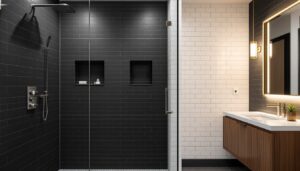
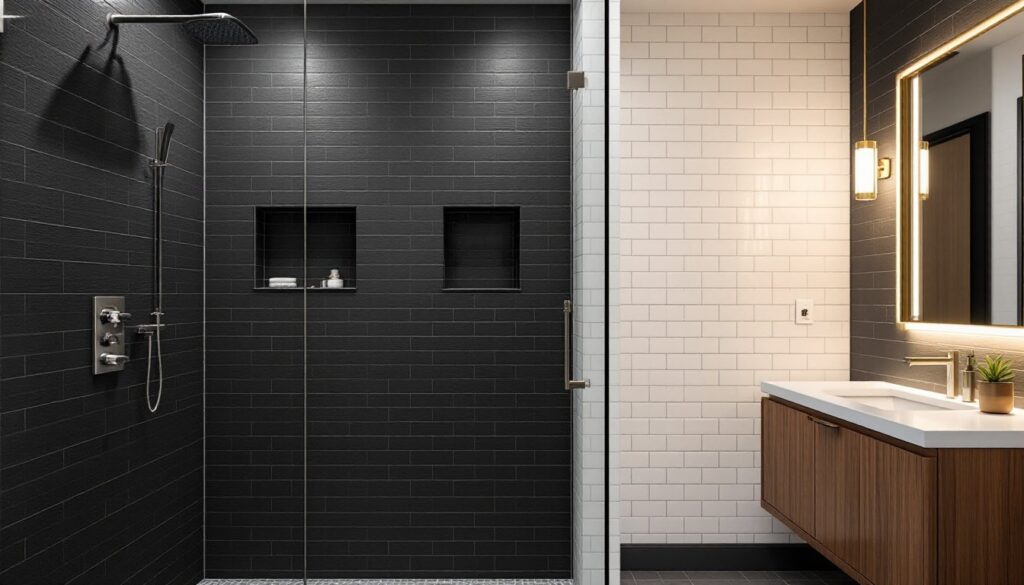
A modern minimalist approach strips away pattern and ornament, letting black tiles do the heavy lifting. Floor-to-ceiling black tile in a tight, clean layout creates a recessed spa effect without a custom steam shower or expensive marble detailing. The key is consistency: same gloss or matte finish across all surfaces, minimal grout line visibility (use an epoxy or urethane grout that matches or contrasts intentionally), and hardware that doesn’t fight for attention.
For a minimalist bathroom, consider a single-color palette with crisp white or light gray grout, stainless steel fixtures, and neutral vanity cabinetry. Avoid mixing glossy and matte black tiles in the same space unless you’re deliberately creating an accent wall. A full-height black tile surround behind the tub or shower pan reads cleaner than patchwork tile. This approach works especially well in smaller bathrooms because the cohesive dark backdrop makes the space feel intentional rather than cramped.
Standard subway tile (3″ × 6″ nominal) or a larger format like 6″ × 12″ or 12″ × 24″ black tile simplifies layout and reduces grout lines, both visual and maintenance wins. Keep wall penetrations (shelves, soap dispensers, thermostats) to a bare minimum to preserve the quiet, seamless look.
Textured and Matte Black Tile Finishes
Matte and textured finishes soften the visual intensity of solid black while adding depth and visual interest. Matte black tiles absorb light rather than reflect it, which can make a bathroom feel cozier than high-gloss alternatives. Textured options like hand-scraped tile, rippled surfaces, or lightly embossed patterns introduce subtle movement and tactile variety.
These finishes are forgiving in smaller bathrooms and pair beautifully with warm-toned wood accents, brushed brass or copper hardware, and softer lighting. A word of caution: textured tiles trap moisture and soap residue more easily than smooth glossy surfaces, so plan on more frequent cleaning and ensure ventilation is solid, ideally a bathroom exhaust fan running during and for 20–30 minutes after showers.
Natural Stone and Slate Options
Natural slate and stone in black tones offer organic variation that manufactured tile cannot replicate. Black slate, in particular, splits naturally into thin, irregular shapes that create a rustic, layered look. Honed slate (which has a flat, low-sheen finish) feels warmer underfoot and visually than polished black tile.
Slate demands more maintenance than ceramic or porcelain: it’s porous and requires sealing before installation and resealing annually. Grout lines are wider and more visible because slate pieces vary in thickness, plan for 3/8″ to 1/2″ grout joints. Professional installation is strongly recommended due to the irregular cuts and weight. A standard 12″ × 24″ honed black slate on shower walls with complementary hexagonal black slate floor tiles creates a high-end, organic aesthetic. Always verify with your installer that the slate is rated for wet environments, as some grades are better suited to dry areas.
Mixing Black Tiles With Complementary Colors
Pure black doesn’t require a monochromatic bathroom. Pairing black tiles with white, cream, light gray, or soft blue creates contrast that prevents the space from feeling oppressive. A checkerboard or striped pattern of black and white subway tile is classic and works in both contemporary and traditional homes. Alternatively, run black tile halfway up the wall and switch to white or light tile above, a dado approach that’s easy to achieve and lighter than full coverage.
Neutral grout (white, light gray, or charcoal) changes how the pattern reads. White grout emphasizes each tile and creates grid visibility: darker grout downplays the lines and unifies the surface visually. An accent color like soft sage, pale blue, or cream on the back wall or as a border stripe draws the eye without overwhelming. These approaches prevent black tile from becoming monotonous and give DIYers creative flexibility.
Wood shelving, warm vanity stain, or a light-toned mirror frame provides warmth and visual relief against expanses of black. Bronze or brass-finish fixtures add richness without competing with the tile.
Layout and Pattern Ideas for Maximum Impact
How you arrange black tiles dramatically affects the final look. Vertical layouts (running subway tiles vertically rather than horizontally) can make a bathroom feel taller. Stacked bond (where tiles align directly above one another) emphasizes straight lines and feels more modern: running bond (offset rows) adds subtle rhythm. For larger tile, a diagonal or herringbone pattern creates movement but requires more cuts and subfloor preparation, making professional installation worthwhile.
Proportions matter: a floor-to-ceiling full black surround feels bolder than waist-high tile with a lighter wall above. If you’re uncertain about committing to full coverage, start with a 4–5 foot height and reassess during the rough-in phase. Most shower surrounds run 6–8 feet, so you have flexibility.
Tile size affects grout line visibility and project difficulty. Smaller tiles (2″ × 2″ or penny rounds) require more grout lines and labor but offer a gentler, more textured look. Larger format tile (12″ × 24″ or bigger) demands flatter substrate, more expensive adhesive (modified thin-set for vertical applications), and careful layout to avoid lippage (uneven grout lines). If you’re hiring a professional, larger tiles often cost slightly less labor per square foot once the substrate is prepped correctly.
Accent Walls and Subway Patterns
An accent wall of black tile behind the tub or as a focal point at the shower entry adds drama without requiring full surround coverage. Pairing a black accent wall with white subway tile on the remaining walls keeps the palette fresh and prevents visual fatigue. A vertical black stripe or border running from floor to ceiling on one wall draws the eye and frames the space psychologically.
Subway tile, the 3″ × 6″ workhorse, remains the easiest pattern for DIY installation. Grout lines are consistent and forgiving of minor layout variations. Running bond layout hides imperfections better than stacked bond. Many homeowners find subway tile in black easier to manage than large format because tiles are lighter, standard tools work reliably, and correction is simpler if a tile cracks or adhesive fails. Professional installation still ensures waterproofing, but subway tile is achievable for confident DIYers with proper waterproofing membrane and unsanded grout rated for wet areas.
Lighting and Hardware Considerations
Black tile absorbs light, so lighting design is non-negotiable. A dark shower will feel cave-like without proper illumination. Plan for recessed lighting or wall-mounted sconces flanking a vanity mirror and, ideally, overhead bathroom lighting that can reach the shower surround. Warm-toned bulbs (2700K color temperature) complement black tile better than cool white or bright daylight, reducing the clinical feel.
Contrast in fixture finish also balances dark tile. Stainless steel hardware (faucets, handles, towel bars) provides visual brightness and reads as modern. Brushed brass or copper finishes warm the space and work in transitional or eclectic designs. Shiny chrome can feel cold against black: matte or brushed finishes are more forgiving. All fixtures should be sealed for bathroom environments, look for WaterSense or ADA-certified options rated for continuous moisture exposure.
A recessed shower niche or built-in shelf in stainless steel or lighter material breaks up a solid black expanse and prevents the wall from feeling oppressive. If you’re tiling around plumbing penetrations, plan rough-ins before ordering tile: custom tile cuts around valves and trim rings are possible but add cost and complexity. Waterproofing behind all fixtures and sealing edges with appropriate sealant (not caulk alone) prevents water intrusion behind the tile, a critical step that separates a durable shower from one that fails in 5–7 years.
Lighting design and fixture placement are personal, but the principle is consistent: black tile demands brightness and contrast to avoid a bunker-like effect. Many renovation professionals at Bob Vila recommend layered lighting, ambient overhead, task lighting at the vanity, and accent lighting in the shower, to ensure the space feels intentional and livable.