Table of Contents
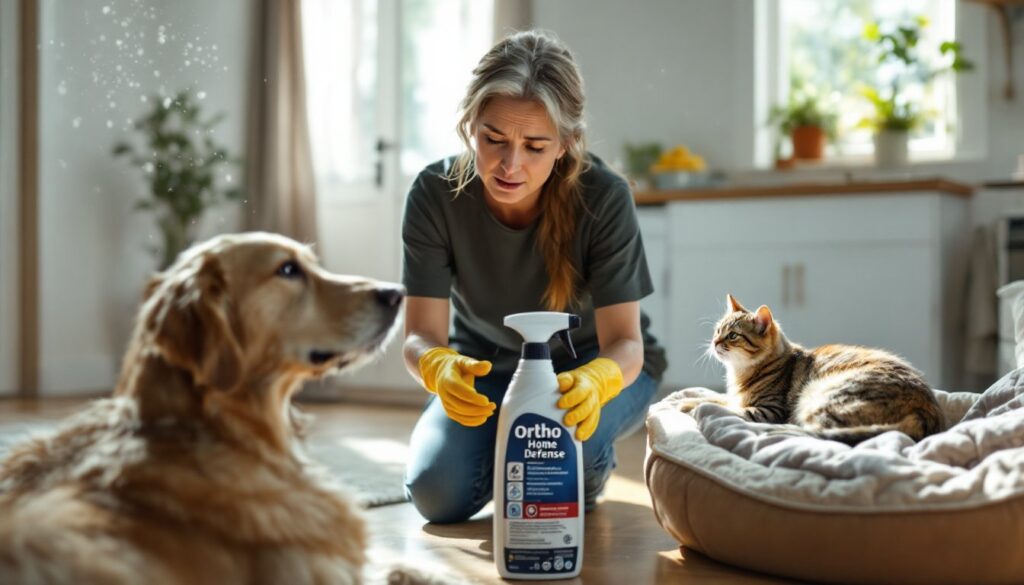
ToggleIf you’ve spotted insects creeping around your home’s perimeter and inside, you might’ve grabbed a bottle of Ortho Home Defense off the shelf without thinking twice. It’s a popular, readily available pesticide, and it works, but if you share your home with dogs, cats, birds, or other pets, you need to pause and ask the hard question: is it actually safe? This guide walks through what Ortho Home Defense is, why pet owners should be cautious, and what steps you can take to protect your animals while still tackling your pest problem.
Key Takeaways
- Ortho Home Defense contains bifenthrin, a synthetic pyrethroid that poses real neurological risks to pets—cats are especially vulnerable due to their limited ability to metabolize this ingredient.
- Signs of pesticide exposure in pets include tremors, excessive drooling, vomiting, hyperactivity, and seizures; contact a veterinarian or animal poison control immediately if exposure is suspected.
- If you use Ortho Home Defense, remove all pets for at least 2–4 hours, turn off HVAC systems, cover pet food and bedding, and wait 24 hours before pets access heavily sprayed areas.
- Safer alternatives exist for pet owners, including non-chemical methods like caulking and food-grade diatomaceous earth, targeted gel baits, professional pest control services, and integrated pest management (IPM).
- For pet-friendly homes, the risks of Ortho Home Defense often outweigh the benefits—exploring safer pest control alternatives protects your animal’s safety without compromising pest elimination.
What Is Ortho Home Defense and How Does It Work
Ortho Home Defense Insect Killer for Indoor & Perimeter is a broad-spectrum pesticide designed to kill a range of household pests, ants, roaches, spiders, fleas, ticks, and other crawling and flying insects. The product comes in a ready-to-spray bottle and is sold at most hardware and garden retailers.
The active ingredient in most Ortho Home Defense formulations is bifenthrin, a synthetic pyrethroid insecticide. Pyrethroids are man-made versions of natural compounds found in chrysanthemum flowers. When bifenthrin makes contact with an insect’s nervous system, it disrupts sodium channels, causing paralysis and death. The spray also typically contains other ingredients like petroleum distillates and surfactants that help the product adhere to surfaces and penetrate insect exoskeletons.
Ortho Home Defense comes in several formulations: the standard indoor/perimeter spray, a granule version for lawns and around foundation perimeters, and aerosol versions. Each has slightly different application methods and coverage areas. The indoor spray is applied along baseboards, around windows and doors, and on visible pest trails. Outdoor applications target the perimeter foundation, patios, and landscaping edges where pests enter or hide.
Pet Safety Concerns With Ortho Home Defense
Pets and broad-spectrum pesticides don’t mix well, and bifenthrin poses real risks to dogs, cats, and other animals. The EPA categorizes bifenthrin as a Category III pesticide (low toxicity to humans at typical exposures), but that doesn’t mean it’s safe for pets. Animals have different metabolisms and behaviors than humans, they lick surfaces, roll on treated areas, and groom themselves constantly, all of which increase exposure risk.
Active Ingredients and Their Effects on Animals
Bifenthrin crosses the blood-brain barrier in mammals and can accumulate in fatty tissues. In dogs and cats, even low-level exposure can trigger hyperexcitability, tremors, hypersalivation, and, in severe cases, seizures. Cats are particularly vulnerable because they lack certain liver enzymes needed to metabolize synthetic pyrethroids efficiently, making them more susceptible than dogs at lower doses.
The petroleum distillates in the formulation also deserve attention. These solvents can irritate skin and mucous membranes, cause gastrointestinal upset if ingested, and are absorbed through the skin more readily in animals than humans. Together, the active ingredient and the carriers create a compound product that’s harder to predict than bifenthrin alone.
Toxicologists at the EPA note that pets ingesting or inhaling significant amounts of Ortho Home Defense may experience neurological symptoms within hours. Even minor contact, a dog walking across a freshly sprayed baseboard, a cat brushing against a wet spray residue, can lead to mild signs like drooling or restlessness, which many pet owners dismiss as normal behavior.
Signs Your Pet May Have Been Exposed
If your pet has been exposed to Ortho Home Defense, watch for these signs over the next 12–24 hours:
- Tremors or muscle twitching (especially in the legs or jaw)
- Excessive drooling or hypersalivation
- Vomiting or diarrhea
- Hyperactivity or unusual agitation
- Loss of appetite
- Difficulty walking or loss of coordination (ataxia)
- Seizures (in severe exposures)
- Respiratory distress or coughing
Any of these warrant an immediate call to your veterinarian or local animal poison control. Time matters with pesticide exposure: waiting “to see if it passes” can allow the toxin to reach critical levels. Have the product label handy when you call, vets need to know the exact active ingredient and concentration.
Best Practices for Safe Application in Pet-Friendly Homes
If you decide to use Ortho Home Defense even though having pets, strict application protocols are non-negotiable. Cutting corners here can put your animal at serious risk.
Before you spray:
- Remove all pets from the house for at least 2–4 hours after application, ideally longer. Don’t assume your dog or cat is outside, double-check every room, closet, and garage. Some formulations recommend pets and children stay away until surfaces are completely dry: read the label and add an extra hour for safety.
- Turn off HVAC systems before spraying interior surfaces. Closed vents prevent aerosol drift into bedrooms and other rooms. Leave them off until after the spray has dried (30 minutes to 1 hour, depending on humidity).
- Cover pet food and water bowls, bedding, and toys. Even a light spray residue on these items can pose a risk. Store them in sealed cabinets or a closed room during application.
- Wear appropriate PPE yourself: gloves, goggles, and a respirator mask (N95 minimum, or better if you have a spray can with propellant). Don’t skip this, you’re protecting your own health too.
During application:
- Apply only to areas your pet cannot access: baseboards at least 12 inches from pet bedding, door thresholds where your dog doesn’t lie, and outdoor perimeter edges away from pet run areas.
- Avoid over-spraying. A light, even coat is sufficient. Heavy application doesn’t kill more bugs, it just increases residue and risk.
- Apply early in the day so maximum drying occurs before pets return.
After application:
- Ventilate the house thoroughly: open windows and doors (weather permitting) for 30 minutes to 2 hours after spraying.
- Wipe down any surfaces your pet contacts regularly (their food area, favorite resting spots) with a damp cloth once the spray is dry.
- Don’t assume “dry” means safe. Some residue persists on surfaces. Pet toxicologists often recommend waiting at least 24 hours before pets have unsupervised access to heavily sprayed areas.
Honestly, if you have a cat or a pet with known sensitivity to chemicals, applying Ortho Home Defense indoors carries too much risk. The benefit of killing a few roaches doesn’t justify a potential vet emergency.
Safer Pest Control Alternatives for Pet Owners
If you want to avoid the risk altogether, several safer options exist for pest control in pet homes.
Non-chemical physical methods:
Caulking and sealing cracks around baseboards, window frames, and door thresholds prevents pests from entering in the first place. This is the gold standard, no poison, no residue, no risk. Diatomaceous earth (food-grade only, not pool-grade) can be applied lightly around perimeters: it’s a mechanical desiccant that kills insects on contact but poses minimal risk to mammals if used correctly. Boric acid products, while still chemicals, have a lower toxicity profile than pyrethroids for many pets, though they’re not entirely pet-safe either.
Reviews of best ant killers show that many homeowners opt for targeted gel baits instead of broad-spectrum sprays. Gel baits like Advion or Terro are contained in small stations that pets can’t access, and they work slowly by allowing ants to carry poison back to the colony. This means less exposure in your home and faster pest elimination.
Professional pest control:
Hiring a licensed pest control company gives you access to products and application methods that homeowners can’t use. Professionals can apply pet-safe insecticides (such as those based on spinosad or diatomaceous earth) and know how to minimize residue in living spaces. Many pest control companies specifically advertise pet-safe treatments. Yes, it costs more than a DIY spray can, but the reduced risk and often better results make it worthwhile for pet owners. Resources like HomeAdvisor can help you find local, licensed contractors and get cost estimates.
IPM (Integrated Pest Management):
This approach combines prevention, monitoring, and targeted treatment. Declutter your home (pests hide in junk), fix water leaks (pests need moisture), store food in sealed containers, vacuum frequently, and seal entry points. Only treat problem areas once you’ve confirmed you actually have a pest issue. Many times, good hygiene and preventive sealing eliminate pests without any pesticide. Your local homeowner advice resources often detail IPM strategies tailored to your region.
Conclusion
Ortho Home Defense works, but it’s not inherently safe for pets, bifenthrin and petroleum distillates pose real neurological and systemic risks to dogs, cats, and other animals. If you must use it, strict application protocols and extended removal periods for pets are essential. Better yet, explore non-chemical sealing, targeted baits, professional treatments, or preventive IPM methods. Your pet’s safety is worth the extra thought and planning.