Table of Contents
ToggleA small patio doesn’t have to feel cramped or underutilized. With intentional design choices and smart layouts, even a modest outdoor space can become an inviting retreat that extends your living area and adds real value to your home. Whether you’re working with a balcony, a narrow side yard, or a postage-stamp back corner, the key lies in choosing furniture wisely, layering light strategically, and using vertical space to your advantage. This guide walks you through practical, budget-friendly tiny patio ideas that transform constraints into design opportunities.
Key Takeaways
- Tiny patio ideas focus on smart furniture that serves double duty—choose bistro tables, stackable chairs, and storage benches instead of oversized sectionals to maximize usable space.
- Layered lighting with warm string lights and soft wall sconces transforms a small patio into an inviting evening retreat while making the space feel larger and less cramped.
- Vertical gardening using wall-mounted planters, trellises, and tiered stands adds greenery and texture without consuming valuable seating or dining floor space.
- Partial slatted screens and retractable shade sails provide privacy and shade without creating a boxed-in feeling that blocks light and air circulation.
- Budget-friendly upgrades like painting the patio surface, adding outdoor rugs, and strategically placing mirrors create visual depth and polish without major investment.
- Starting with intentional design choices—such as light-colored furniture and distinct zones—turns tiny patio constraints into opportunities for personalized outdoor living.
Maximize Space With Smart Furniture Choices
The most common mistake on small patios is oversizing furniture. A large sectional sofa, while tempting, swallows a compact space and limits movement. Instead, focus on pieces that serve double duty and don’t sprawl beyond their footprint.
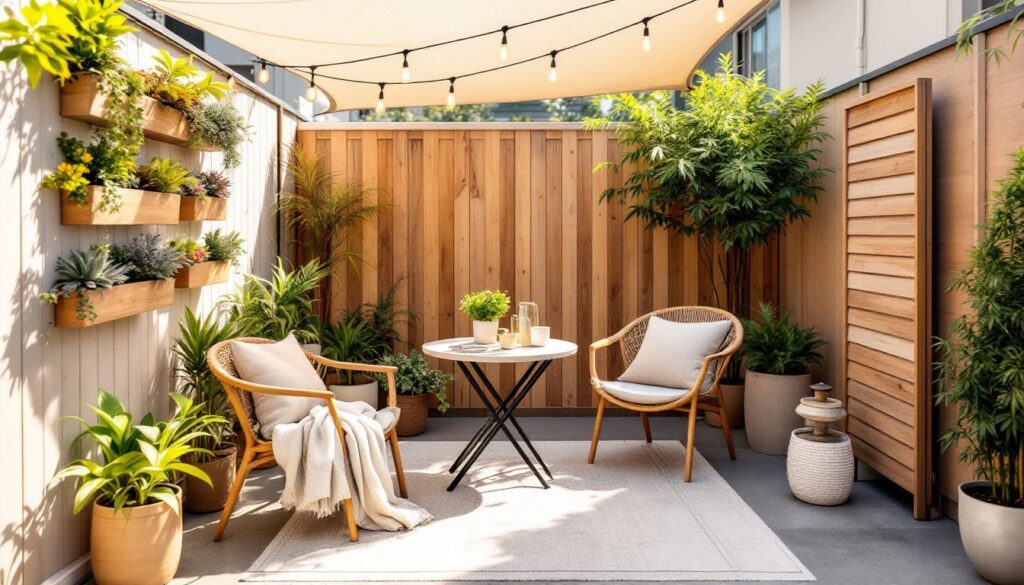
Consider a bistro table with two chairs (24–30 inches in diameter) rather than a full dining suite. This footprint works for morning coffee, casual meals, or a workspace in good weather. If you need seating for guests, opt for stackable or nesting chairs that tuck away when not in use. Look for furniture with open legs rather than skirted pieces, the visible floor underneath makes the space feel larger and less heavy.
Benches with storage offer another win: they seat multiple people, provide a place to stash cushions or gardening tools, and take up less visual weight than a sofa. Pair one with a small side table (16–20 inches square) for drinks and decor. Avoid dark, bulky frames: light woods or powder-coated metal in white, gray, or natural tones recede visually and brighten tight quarters.
For lounging, a single oversized outdoor chair or daybed paired with a throw pillow and blanket often beats a sofa on a real patio. It gives you a dedicated comfort zone without monopolizing the space. Folding or rolling pieces are practical too, pull out a deck chair only when needed, then tuck it behind the door or under a bench.
Lighting Ideas That Make Small Patios Feel Bigger
Thoughtful lighting transforms a small patio from purely functional to genuinely inviting, especially in evenings. Poor lighting makes a tight space feel cramped and claustrophobic: layered, warm lighting opens it up.
Ambient And Task Lighting Strategies
Ambient lighting sets the overall mood. String lights (café lights, Edison bulbs, or bistro-style strands) stretched overhead create a canopy effect and draw the eye upward, making ceilings feel higher. Install them on a diagonal or in a gentle curve rather than straight lines, it feels more intentional and less institutional. Warm white bulbs (2700K color temperature) are essential: cool white feels harsh in tight spaces.
Recessed or flush-mount fixtures mounted on the house or fence are cleaner alternatives if overhead lines don’t suit your style. These deliver consistent light without the visual clutter of hanging wires.
Task lighting serves specific functions: a clip-on lamp at the bistro table for reading or cards, or a solar stake light or two along pathways. Avoid bright, directional spotlights that create harsh shadows and make small areas feel smaller. Wall-mounted sconces flanking a doorway or along a fence provide soft illumination without taking up floor space.
Candlelight and lanterns (real or flameless LED) add warmth and scale down the visual impact compared to permanent fixtures. Group small lanterns on a shelf or ledge rather than scattering them, clusters feel intentional. Solar-powered options eliminate wiring hassles and are practical for renters or temporary setups.
Vertical Gardening And Greenery Solutions
Green space on a tiny patio doesn’t require an expansive footprint. Vertical gardening, using walls, fences, and trellises, adds lush texture and color without eating into seating or dining areas. This approach is also ideal if your patio sits in a shady spot or you lack full sun for beds.
Install wall-mounted planters or pocket planters (shallow fabric or metal vessels that hang flat against a surface). These hold herbs, trailing succulents, or ornamental foliage and cost just a few dollars per pocket. Arrange them in a grid, staircase, or random pattern depending on your style. The vertical emphasis makes walls feel less confining.
Trellises and climbing vines (clematis, climbing jasmine, or lightweight varieties like creeping fig) soften fence lines and create a natural sense of enclosure without blocking sightlines entirely. Position a trellis in a corner or against the back fence: vines will eventually screen an ugly wall or your neighbor’s view without the solidity of a solid privacy panel.
Tiered plant stands and corner shelves stack containers vertically. A tall narrow stand (18–24 inches wide) fits into unused corners and lets you stack three or four tiers of pots without spreading horizontally. Mix foliage plants (ferns, hostas in shade) with trailing ivy or colorful annuals.
Keep in mind: in smaller spaces, fewer, larger plants read better than dozens of tiny ones. A single 3-gallon or 5-gallon container with a statement plant (a small Japanese maple, ornamental grass, or blooming shrub) anchors a corner better than a cluster of 2-inch pots. The scale feels more intentional and less cluttered.
Adding Privacy And Shade Without Overwhelming The Space
Privacy and shade are often non-negotiable on small patios, especially in urban settings or close-quarter neighborhoods. The trick is solving both without creating a fortress that blocks light and air.
Partial screens and slatted panels offer a middle ground between full visibility and complete privacy. A 6-foot slatted fence panel or privacy screen (wood, composite, or metal) positioned along one edge breaks sightlines while letting some light filter through. Slightly offset it from your property line rather than blocking the entire patio, this creates depth and mystery instead of a wall-in-a-box feeling.
For shade, a retractable shade sail (a tensioned fabric canopy) is less permanent than a pergola and takes up minimal footprint when rolled up. Mount it corner-to-corner or corner-to-wall: it shades most of the seating area without overheating the patio. Alternatively, a lean-to pergola against the house provides overhead lattice shade while keeping the footprint minimal. Vines will eventually fill the lattice for added coverage.
Potted plants and bamboo screening offer portable privacy solutions for renters or anyone avoiding permanent modifications. A cluster of tall potted bamboo (4–6 feet) arranged in a corner or along an edge acts as a living screen. Bamboo grows vigorously, so contain roots in pots to prevent takeover.
Note that building permanent structures (pergolas, screens taller than 6 feet, or anything attached to the house) may require a building permit depending on your jurisdiction and HOA rules. Check local IRC and zoning codes before installing. A contractor or local building inspector can confirm requirements.
Budget-Friendly Design Elements And Finishing Touches
You don’t need a large budget to make a small patio feel polished and inviting. Smart material choices and thoughtful accents multiply impact.
Paint or stain the patio surface (concrete, wood, or stone) in a neutral or soft tone. Light colors reflect heat and visually expand the space: dark finishes absorb light and make tight areas feel smaller. A fresh coat of patio sealer or concrete stain costs $50–$150 for a small area and instantly updates the backdrop for furniture and décor. Allow proper cure time (typically 48–72 hours) before placing furniture or planters.
Rugs define zones and add color without permanent commitment. A 4×6 or 5×7 outdoor rug anchors a seating area and makes a small patio feel more room-like. Choose weather-resistant materials and lighter shades to brighten the space. Position the rug so that at least the front legs of chairs sit on it, this ties furniture together visually.
Throw pillows and cushions inject personality and comfort cheaply. Stick to 2–3 colors to avoid visual chaos. Seasonal swaps (bright patterns in summer, warm textures in fall) refresh the look without re-buying furniture.
According to design experts, 14 ideas to make a small garden look bigger emphasize creating distinct zones and using vertical space, principles that apply equally to patios. Similarly, outdoor living design resources often highlight the value of cohesive color palettes and strategic plant placement.
Simple hardscaping touches also work: replace standard gravel or mulch with polished pea gravel or decomposed granite in warm tones. A water feature (tabletop fountain, birdbath, or small recirculating pool) adds visual interest and the soothing sound of water makes tight spaces feel more expansive. Position it where you’ll see and hear it from your main seating spot.
Mirrors strategically placed on a fence or wall behind seating reflect light and create a visual illusion of depth. Use weather-resistant acrylic or tempered glass designed for outdoors, not standard mirrors.
Conclusion
A tiny patio is an asset, not a limitation. By prioritizing multipurpose furniture, layering light thoughtfully, embracing vertical growing space, and choosing strategic privacy and shade solutions, you’ll create an outdoor retreat that feels spacious and inviting. Start with one or two changes, perhaps a string light and a tiered plant stand, then build from there. Small spaces reward intentional design: every choice should earn its place. Your patio doesn’t need to be large to be loved.